A challenge coin rarely means just one thing. The moment it changes hands, it carries a story - a unit earned it, a leader gave it, a team stood behind it, or a milestone mattered enough to mark in metal, wood, or another lasting form. If you're asking what do challenge coins represent, the clearest answer is this: they represent identity, recognition, and connection made tangible.
That is why they endure. Long after a ceremony ends or a deployment wraps up, the coin remains. It fits in a pocket, sits on a desk, or stays tucked in a case, but its real weight comes from what it stands for.
What do challenge coins represent at their core?
At their core, challenge coins represent belonging. They tell someone, you were part of this. You earned your place here. You are connected to a mission, a team, a standard, or a shared experience that mattered.
In military culture, that meaning is direct and deeply understood. A coin can signify service in a specific unit, participation in an operation, respect from a commander, or pride in a branch and its traditions. It is often presented, not purchased casually, which gives it a different kind of authority. The value is not in the material alone. The value is in the reason it was given.
That same structure of meaning has carried into civilian life because the symbolism still holds. Law enforcement agencies, fire departments, businesses, nonprofits, golf groups, and professional organizations use challenge coin-inspired pieces for many of the same reasons. People want to recognize service, commemorate milestones, and create objects that mean more than standard giveaways ever could.
Honor, service, and earned recognition
The strongest challenge coins are tied to earned recognition. That does not always mean combat or formal service, but it does mean the object should mark something real. A promotion. A retirement. A successful mission. A championship season. A founding team. A major client relationship. A conference worth remembering. The coin says this moment counts.
That is why challenge coins often feel more personal than plaques or certificates. A plaque is usually displayed publicly. A coin is carried privately. It becomes part of a person's daily kit, desk setup, office shelf, or memory box. It has a more personal relationship to the owner.
Recognition also works differently with a coin. It feels concise and deliberate. A leader does not need a long speech. The handoff itself often says enough. That economy of gesture is part of the tradition and part of the power.
Still, context matters. If every minor event gets a coin, the meaning can thin out. Overuse turns recognition into routine. The best challenge coins are reserved for moments, contributions, or affiliations with real significance.
Identity you can hold
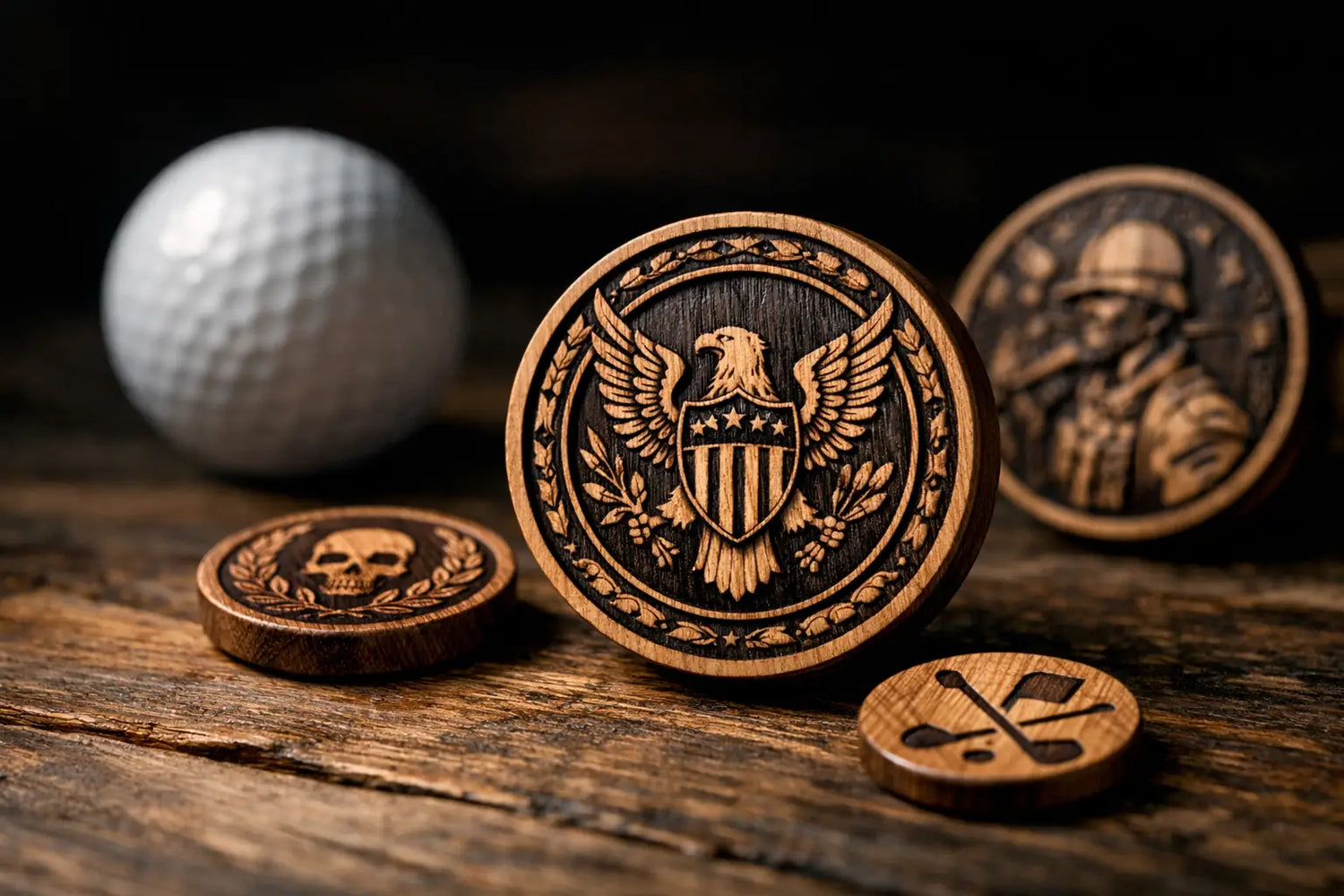
A challenge coin also represents identity. It can reflect branch, rank, specialty, profession, team, values, or shared culture. Symbols, mottos, insignia, dates, and location markers all reinforce that identity in a compact format.
This is one reason coin-inspired design works so well beyond the military. People want objects that reflect who they are and what they stand for. A generic promotional item may be useful for a week. A well-designed marker or recognition piece can stay with someone for years because it feels specific.
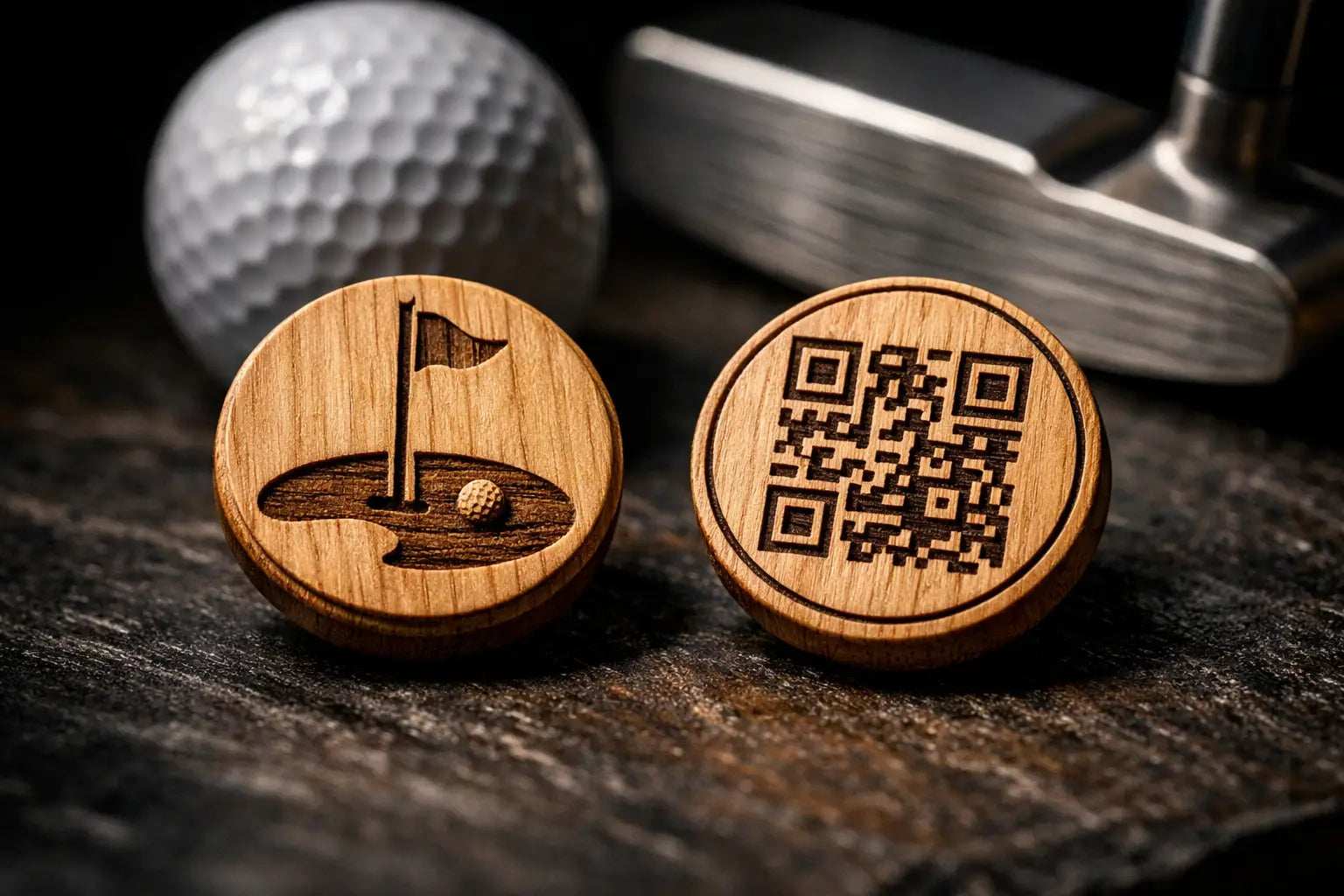
For golfers and professionals, that identity can operate on two levels at once. A marker can still carry the visual discipline and symbolic weight of challenge coin culture while serving a practical purpose on the course. That combination matters. It turns an accessory into a conversation piece, and a conversation piece into a statement of personal brand, unit pride, or organizational standards.
Belonging and shared standards
Challenge coins do not only celebrate the individual. They represent the group.
A unit coin, department coin, or event coin tells members they are part of something larger than themselves. That can be especially powerful in environments where trust, performance, and shared standards matter. Teams want visible reminders that membership has meaning.
This is why challenge coins remain effective in organizations trying to strengthen culture. They can reinforce values in a way posters and slogans often cannot. If a coin is given at the right time, by the right person, for the right reason, it becomes a physical reminder of what the organization claims to stand for.
But there is a trade-off. Symbolism cannot replace substance. A coin can support culture, not create it on its own. If the standards behind it are weak, the object will feel hollow. If the standards are real, the coin becomes proof that those values were lived out.
Why challenge coins still matter outside military settings
Some people assume challenge coins only make sense in military circles. That is too narrow. Their meaning has expanded because the underlying need is universal. People want recognition that feels durable, personal, and worthy of the moment.
In business, for example, a challenge coin-inspired piece can represent credibility, affiliation, and first impressions. That is especially true when design and utility meet. A premium marker used on the course can carry identity in a format that fits naturally into golf culture, executive networking, and event gifting.
That shift matters because modern professionals are tired of disposable touchpoints. Paper cards get lost. Cheap giveaways get ignored. A precision-crafted piece with clear purpose creates a different kind of interaction. It says this connection was intentional.
That is one reason brands like Warfighter Markers have found traction with both veteran-connected audiences and broader professional markets. The symbolism of the challenge coin remains intact, but the format evolves to meet how people actually connect, recognize, and remember each other now.
What challenge coins represent in business and networking
In a professional setting, challenge coins often represent credibility, preparedness, and distinction. They show that someone values presentation and understands that memorable objects create stronger follow-through than forgettable materials.
This does not mean every business needs a coin-inspired tool. It depends on the audience and occasion. In some industries, a standard card is enough. In others - especially relationship-driven spaces like golf, events, leadership circles, associations, and premium client experiences - a better object makes a stronger impression.
That is where challenge coin-inspired markers have a unique advantage. They carry the ceremonial feel of recognition, but they also function in real settings. On a course, during a tournament, or after a meeting, they create a natural moment of exchange. If paired with a digital destination, they can bridge tradition and modern efficiency without feeling forced.
Design is part of the meaning
What a challenge coin represents is shaped by how it is made. Material, finish, engraving clarity, and presentation all influence whether the piece feels worthy of its purpose.
A poorly made coin can undercut the message. If the design is muddy, the edges feel careless, or the object wears down quickly, the symbolism loses strength. Precision matters because it communicates respect for the recipient and seriousness about what the piece stands for.
That is also why craftsmanship should support long-term use, not just first impressions. In coin-inspired golf markers, for example, a flat, precision-milled finish helps reduce wear and preserve a crisp, high-resolution image over time. The smoother surface is engineered to stay cleaner and hold its visual integrity even after hundreds of rounds. That kind of clarity reinforces the core promise: this is not disposable.
What people remember most
Years later, most people do not remember every speech, agenda, or event detail. They remember who handed them the coin, why they received it, and what season of life it represents.
That memory function is part of the reason challenge coins remain relevant. They compress a larger story into a small, lasting form. They make recognition portable. They give pride a physical shape.
So what do challenge coins represent? They represent honor when words are not enough. They represent belonging when people need to know they are part of something real. They represent identity when symbols matter. And they represent intentional connection in a world full of forgettable objects.
The best ones do not ask for attention. They earn it, then keep it.